
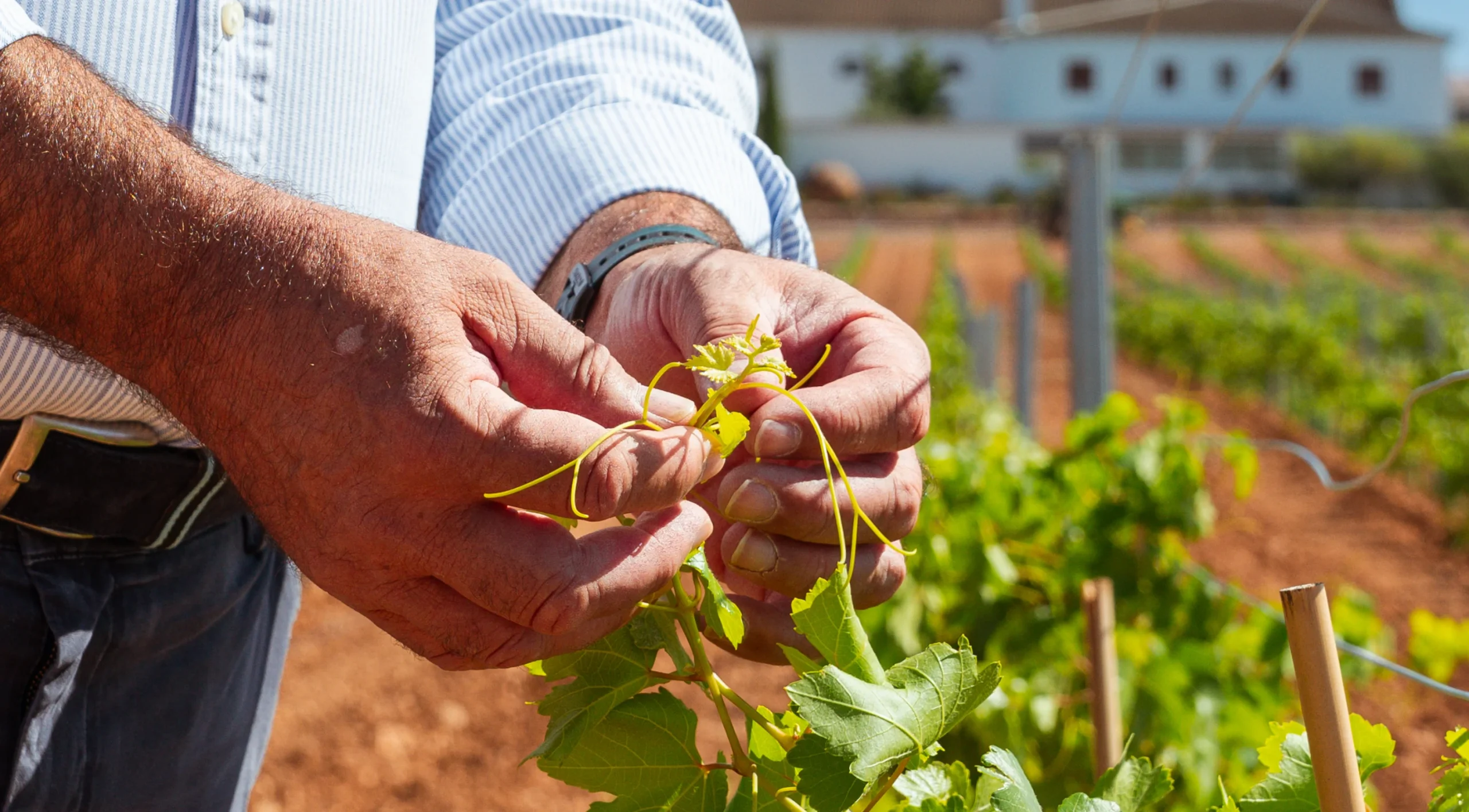
The grape harvest is one of the most important moments in the winemaking calendar, but getting to that point takes an entire year. There are no shortcuts in the vineyard: the grapes need time, care, and specific conditions to achieve the balance we seek before they enter the winery.
In Rueda, where the grape harvest has very unique characteristics, this monitoring is especially important. The climate, soil, grape variety, and the development of each plot determine the right time to begin the harvest.
But what happens before that day arrives? How do we know when a grape is truly ready to be harvested?
We can summarize this by following the vine’s calendar, from winter dormancy to the decisive weeks of late summer.
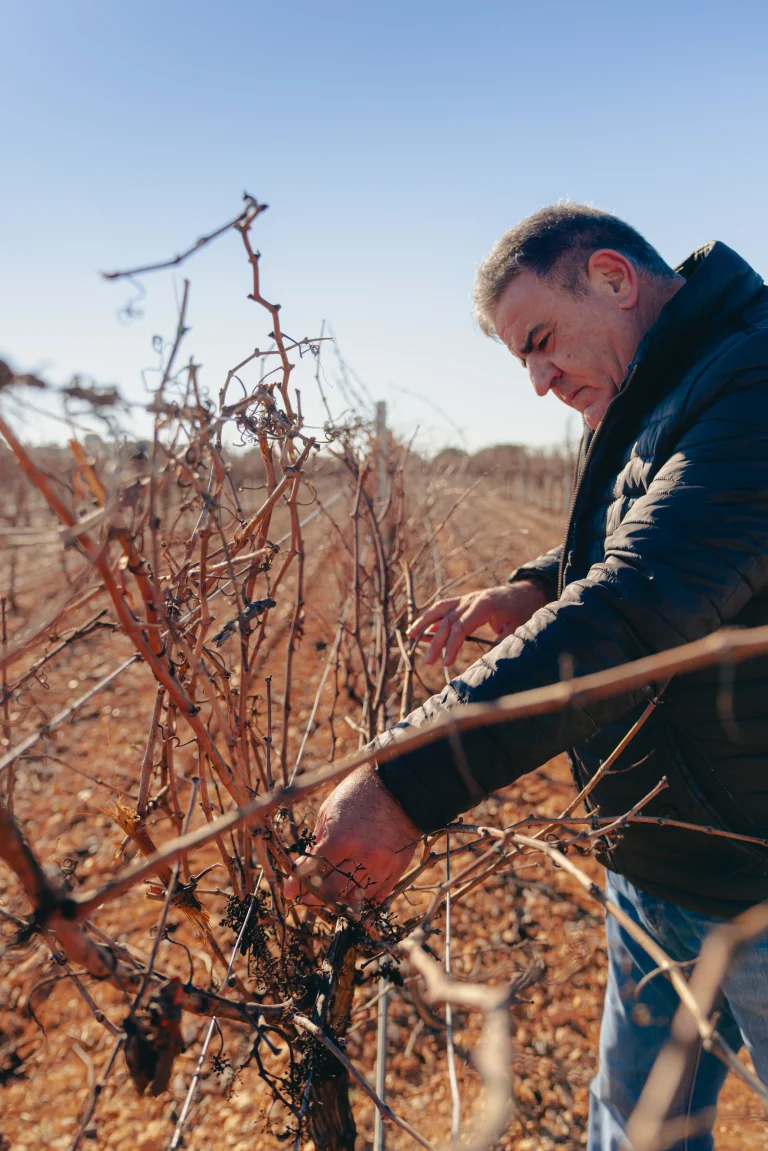
Winter: The Vine Rests, but the Work Continues
Between December and February, the vine is in vegetative dormancy. It has shed its leaves and its activity has slowed considerably, but the vineyard is far from at a standstill.
During these months, we carry out one of the most essential tasks of the growing cycle: winter pruning. Through this process, we select the shoots and buds that will remain on the vine, helping to regulate its future production and maintain a balanced structure.
It’s also a good time to work the soil and prepare the vineyard for the new growing season.
Although the harvest in Rueda is still many months away, the decisions made during the winter are already influencing the harvest to come.
Spring: A New Cycle Begins
As temperatures rise, the vines begin to awaken. First comes what is known as “lloro,” when the sap begins to flow again and oozes from the pruning wounds. Shortly thereafter, budbreak begins, and the buds transform into small green shoots.
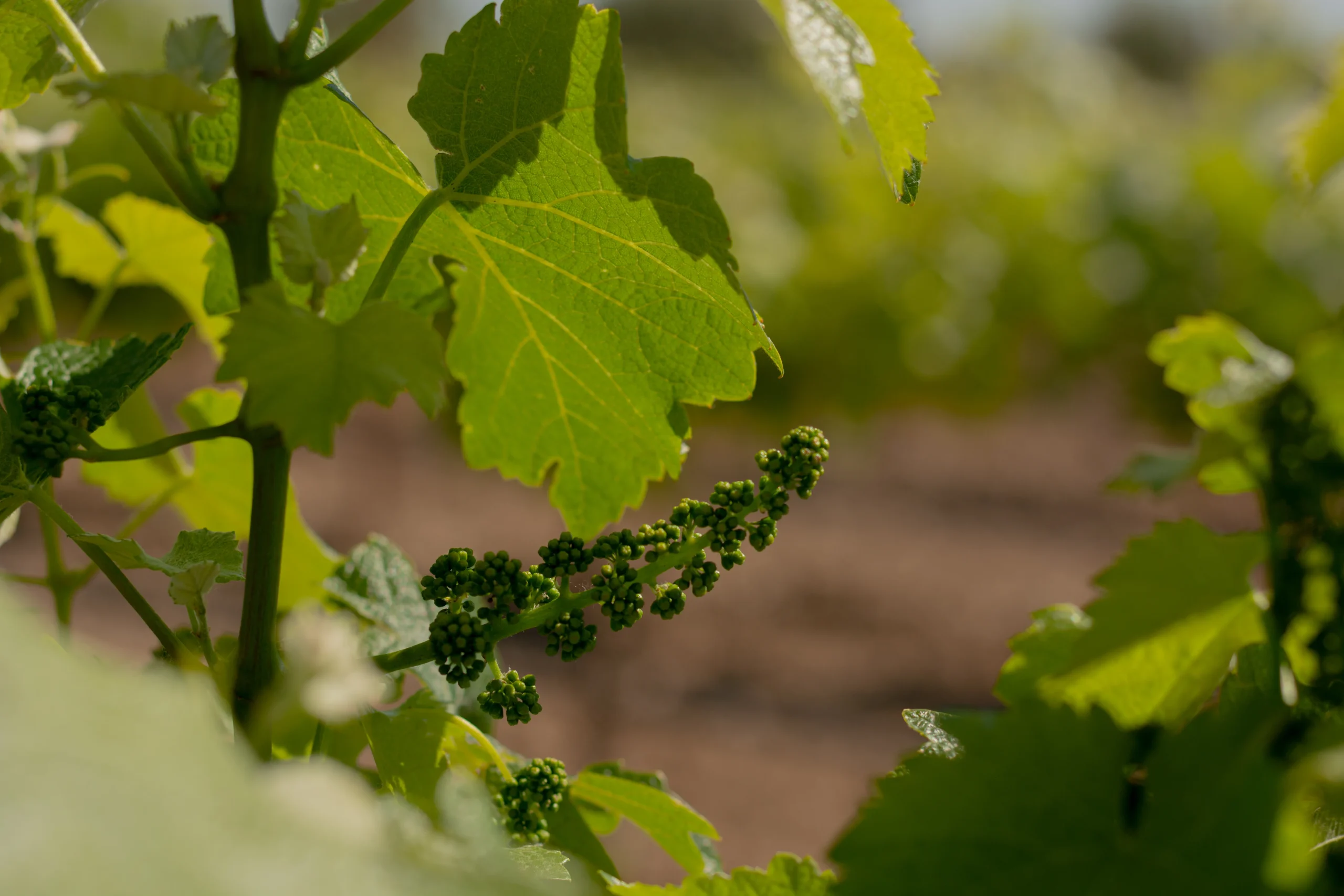
During April and May, growth accelerates. Leaves and shoots appear, followed by the flowers that will develop into future clusters.
Flowering and fruit set are particularly important stages. The fertilized flowers begin to develop into small grapes, and the future harvest begins to take shape.
During this phase, we also pay special attention to the vineyard’s health and the development of the vegetation. The goal is to achieve the right balance between the plant and the fruit.
We’re not thinking about the harvest yet. But we are focused on ensuring that the grapes are healthy and fully developed by the time the harvest arrives.
Summer: The Countdown Begins
During the months of June and July, the clusters grow and the berries gradually increase in size. The vine continues to photosynthesize and build up reserves as the grapes progress toward ripeness.
The next major milestone is veraison.
In white grape varieties—such as those that play a particularly prominent role in the Rueda region—the grapes begin to change in appearance and take on more yellow and golden hues. This is a visible sign that the ripening process has begun.
From this point on, significant changes occur in the composition of the grapes. Sugar levels rise, acidity evolves, and the compounds responsible for the aromas and characteristics we will later find in the wine gradually develop.
And this is where one of the most challenging parts of the job begins: knowing how to be patient.
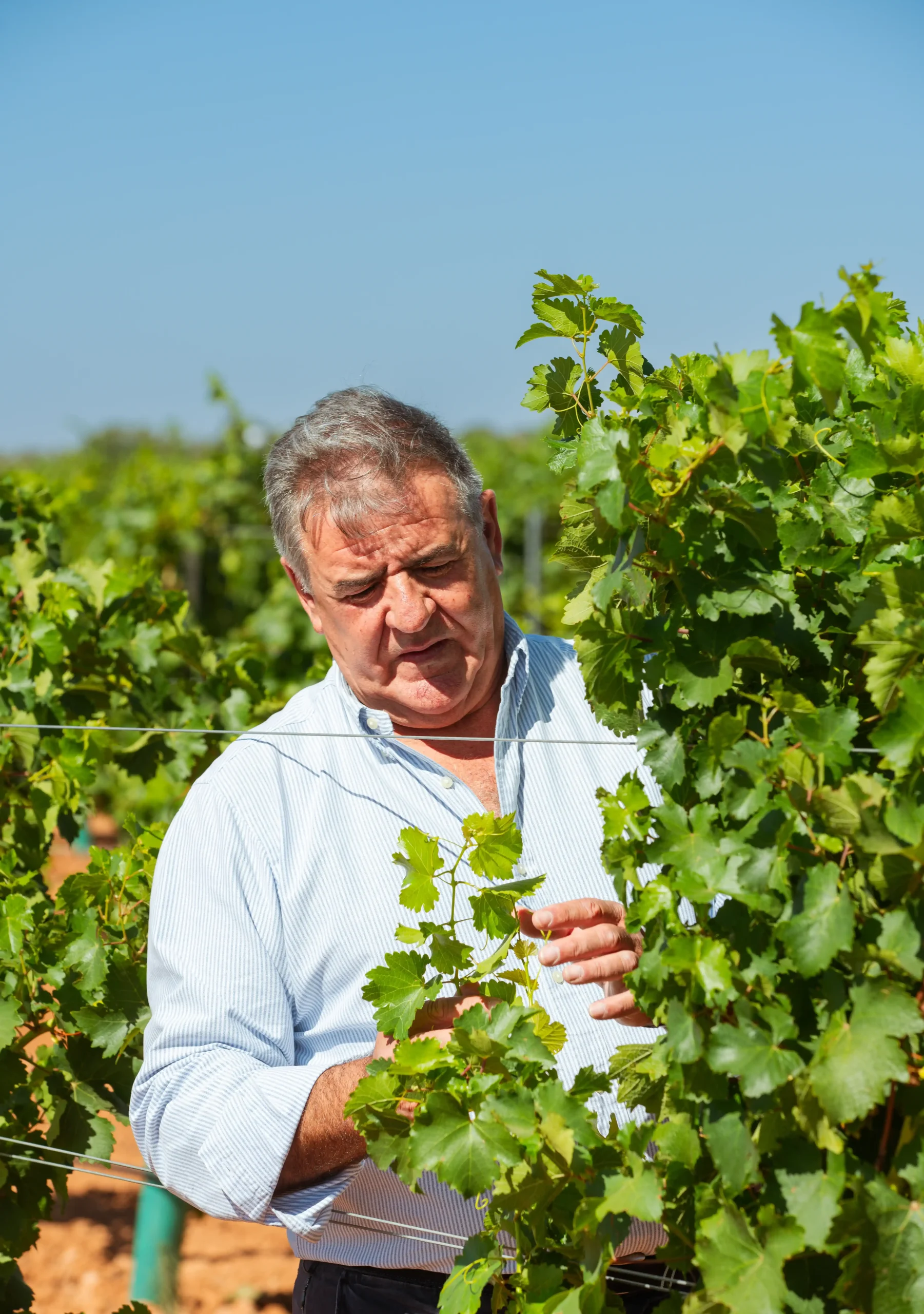
August and September: When does the grape harvest begin in Rueda?
There is no universal date for when to begin the grape harvest. Not even all the plots belonging to the same winery need to be ready at the same time.
In the weeks leading up to the grape harvest in Rueda, we conduct regular checks to monitor how the grapes are developing. We analyze parameters such as estimated sugar content, acidity, and pH, but we also observe other factors that help determine their ripeness.
Because a grape may have a certain sugar content and yet still need time to reach the balance we’re looking for.
Aromatic and phenolic ripeness is also essential. The condition of the skin, pulp, and seeds, the texture of the bean, and its aromas and flavor provide information that complements the analytical data.
That’s why, in addition to analyzing, you have to look, touch, and try things out.
Only when all of these factors indicate that the grapes have reached the right stage is the decision made: it’s time to harvest.
The Grape Harvest: The Decisive Moment
When the grape harvest begins, all the work done over the previous months takes on meaning.
Harvesting must be done carefully to preserve the quality of the grapes and ensure they arrive at the winery in the best possible condition. Temperature, transportation, and the time elapsed before processing are factors that can influence the final result.
In Rueda, moreover, weather conditions and the characteristics of each growing season mean that every harvest is different. The calendar serves as a guide, but it is the vineyard that ultimately sets the pace.
That is why we cannot speak of a specific date that repeats itself year after year. We can speak of cycles, of observation, and of decisions made based on the actual development of the grapes.